
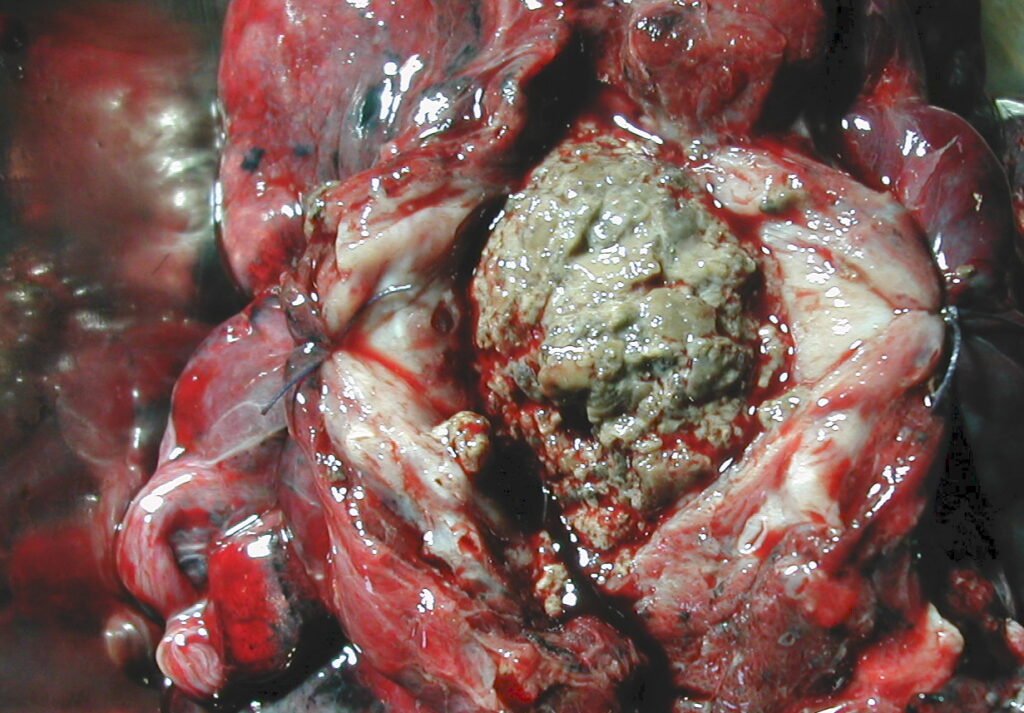
The most important cause of ‘coughing out blood’ even after successful treatment of tubercular infection is the presence of a special type of fungus germ called ‘Aspergillus Fumigatus’ which is thread-like in shape. When this fungus makes its permanent abode inside the lung, a sufferer starts coughing out blood repeatedly. What happens after an effective course of antitubercular treatment, tuberculosis does leave the affected lung permanently but before leaving it creates a hollow space or a cavity inside the lung. To these hollow spaces ‘Aspergillus’ fungus reaches via wind pipes and stays there permanently, exactly the same way as a bird makes its nest in a pre existing hollowed-out space inside the trunk of a tree.
Apart from tuberculosis, other diseases like bronchiectasis and chronic pus too are responsible for creating hollow cavities inside the lung. Besides these, the cancer of lung, disease of sarcoidosis and histoplasmosis also lead to dead hollow spaces inside the lung. These hollow cavities become the favourite spot for ‘Aspergillus’ fungus to stay and thus after sometimes this fungus makes a solid fibre ball of threads. Apart from this, the blood pipes adjacent to these hollowed-out spaces undergo an anatomical change and become very weak. When a person coughs, these weakened blood pipes burst open due to sudden increase in internal pressure and with the result, the affected person starts coughing out blood.

Dr. K. K. Pandey is a Senior Consultant in Thoracic & Endothoracic Surgery at Indraprastha Apollo Hospital, New Delhi, with 30+ years’ experience in lung cancer surgery, chest tumors, pleural diseases, VATS, esophageal surgery and minimally invasive thoracic procedures. He is also a dedicated health writer and educator.